

USEFUL INFORMATIONS


"The first thing to do
about every issue
is getting informed."
Adora Svitak
USEFUL INFORMATIONS
Everything you need to know about general issues related to travelling in the European Union. Read them carefully to be prepared to live your travel at best.


IDs and VISAs
All our travels will be inside the European Union and the Schengen Area, so EU rules will apply. Since these rules are very complicated, generally speaking, this is what you need:
-
NON EU-CITIZENS
You need three mandatory documents in order to enter the EU (they're written in bold, here):
-
a passport with at least 6 months of residual validity;
-
a Schengen Visa that you must request at the Consolate of your destination country; in order to get it, you'll need your passport, a photo, a medical insurance valid inside the EU and Schengen Area and proofs of your trip (e.g. airplane tickets, hotel reservations, etc.). It costs 90 € on average and it's valid 90-180 days. Please start the Schengen Visa procedure in advance to avoid troubles at the custom.
-
From October 1st, 2026, if you come from one of the 50+ countries that signed new agreements with the EU, you won't need Schengen Visa anymore, but you'll need ETIAS, a quick Visa for tourists, it will cost 20 € and you'll get it with an easy online procedure.
-
EU CITIZENS:
For you it's extremely easier. You'll just need an ID, either a passport with at least 3 months of residual validity OR your national ID with the chip in it (no paper IDs) and you'll be okay.
I also recommend you to take your European Health Insurance Card, since you don't need a medical insurance to travel inside the EU.
However, since there are a lot of exceptions to these rules, please tell me your nationality during our first meeting and I'll provide you all the necessary info specific for you regarding this topic.

FOOD AND DRINKS
I will never stress you enough on this topic during our trip, not only because I'm a big guy and I LOVE to eat, and I want the best for you, but also because as your tour leader I have duties to absolve and one of this is about troubles that you could face during your European experience with food.
So here's a quick list of useful info about it:
-
EU has probably the highest standards in the world regarding food and drinks in terms of quality, integrity and health. Our laws are a nightmare for our food producers, just imagine how hard they are for non-EU companies. However, there's still a good chance to eat bad. I'll try and avoid it when we're together, of course, but during your free time you could have unmemorable experiences.
-
Local cuisines are very different depending on the country. Generally speaking, Italian, Greek, Spanish and French cuisines are considered the best in Europe, but eating in an Italian restaurant outside of Italy will be a lot different than doing it in Italy. Even fast food chains like McDonald's or Burger King are deeply different in their menus depending on the country.
-
We have plenty of options for vegans, celiacs and other food-related diseases/preferences. Just tell me before our trip.
-
You won't be allowed to bring some kinds of food back to your country if you're a non-EU citizen, especially foods related to meat (like salami) and milk (like cheese). This is because of custom laws and health laws. Part of my job will be to warn you about this during your stay. I'll also teach you to enjoy the pleasure of "the here and the now".

HEALTHCARE
Healthcare is a reason of pride for EU Citizens 'cause it's ALMOST entirely free, since it's paid by the citizens through their taxes.
As you probably noticed, I said "almost": this is because you'll probably have to pay a small sum before your exam or consultation anyway, but we're talking about very cheap money (25-100 €, in Italy we call it "ticket").
This, of course, if you choose public health structures. Unfortunately, EU is currently facing a shortage of doctors and nurses, heavy cuts in public expense for healthcare, and due to aging population and an increasing amount of immigrants with low incomes who can't afford private healthcare, waitings can be very long. If you are a red code and your life is really in danger, the ambulance will come in minutes and you'll skip the line at the ER, but if this is not the case, you may need to wait up to 20 hours in the waiting room before being received in the Emergency Room. Also, you may wait months or years for an exam or a surgery.
This is why private healthcare is florishing nowadays. It costs a lot more but waitings are very short (2-7 days for an exam). Citizens who use private healthcare also have a private health insurance to lower their expenses.
Given this situation, if we're on travel together and you're in trouble, as a tour leader I'll call the Emergency Number for you (this is my only legal obligation, then my responsibility ends there).
If you are a EU Citizen, please take with you your European Health Insurance Card - this will allow you to use public healthcare everywhere in the EU at the same conditions of the citizens of the country you're in (if you're French and you're in Germany, you'll be treated as a German both in therapies provided and costs charged).
If you're a non-EU Citizen, you'll have your mandatory health insurance and you'll follow the rules of your insurance company. However, don't worry: you'll be cured and saved anyway, if there are issues with your insurance company you'll face them later.
European Health Insurance Card for EU Citizens and the mandatory health insurance for non-EU citizens will be needed also in pharmacies to buy drugs.
You can bring your own drugs from home, but it's better if you keep them in their original package and it'd be great if you also attach a prescription (English language will be fine, but the language of your destination country would be even better).
Remember that, even if I'm your tour leader, I cannot give you any kind of drug by law, neither buy them for you, not even if you're dying.
COMMON ISSUES IN BIG CITIES
Pretty much 75% of the travels I offer take place in big European cities. Speaking about the common issues that you can face while exploring such cities, even with a tour leader, it's worth a minute.
A necessary premise: Europe is extremely safe if compared to the rest of the world. 14 of the Top 20 safest countries in the world are in Europe, according to the Global Peace Index. If it's easy to understand why small countries like Iceland or Austria are at the top, even big countries like Italy or Germany are extremely safer in terms of life risk if compared to the United States of America, Middle-East, South-East Asia or Africa. Italy, for example, has one of the lower murder rate per capita in the world (only 276 murder per year on a population of 60 million people). France is the most dangerous country, right now, but it's still the most visited country in the world by far and 90% of the people that went there say it's lovely. So everything is relative.
However, the economic crisis, the growing poverty in some areas and the uncontrolled immigration from Africa and Middle-East have increased the risk level, especially in big cities. Nothing dramatic, but the risk is there.
So here's a list of the most frequent unpleasant issues you may face during your travel:
-
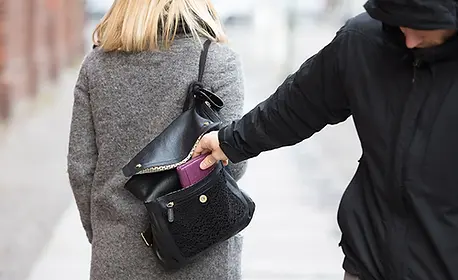
pickpockets: by far the greatest threat for a tourist in Europe, especially on public transports. Never take your eyes off your bags, do not put phones or valuable objects in the back pockets of your trousers, if the place is crowded put your backpack on your chest; pickpocketers are so good you won't even notice them, but losing your wallet or your document and your money on a holiday trip it's very unpleasant, so mind your stuff;
-
scams: in many places you may find scammers that will seduce you into playing a game or taking a picture or seeing their shop or whatever; politely say no and avoid all these kind of experiences;
-
rising prices: in some countries, especially in Southern Europe, when shopkeepers or restaurant managers see a foreign tourist, they make him pay double or triple the amount just because. When you're with me on our tour, it'll never happen, but be careful in your free time;
-
homeless people: poverty is hitting hard in some areas, so be prepared to occasionally see tents and dirt and miserable scenes in the corners of the streets, even in noble cities like Paris or Rome or Berlin; DO NOT interact with them, in any case; it's sad, but you must ignore them;
-
mad drivers: especially in Southern Europe, PLEASE look twice before crossing the street. People are crazy!

WEATHER
Europe has a huge range in terms of weather.
During summer it can be madly hot, especially in the South of the continent, with temperatures above 40°C (104°F).
In winter time it can be freezing cold, especially in the North, like Denmark or Sweden, with temperatures below -30°C (-22°F).
We face tropical storms such as extremely dry seasons, and in some countries we have rain, sun and fog in the same day.
It really depends on where you are and when you go there.
I will suggest you what kind of clothes you should bring before every travel we'll do together.

TECHNOLOGY
Since 2007, all EU countries signed many agreements regarding the use of mobile phones in the Union, so basically today it doesn't matter where you come from: if you're a EU Citizen, you can use your own SIM card in all countries of the Union with almost no variations in fares.
4G and 5G data connections are available on more than 95% of the EU territory. If you're a non-EU Citizen, I recommend you to buy a EU SIM Card to be able to have Internet on your phone.
Don't forget to check the electricity plugs: they're different in many countries. I'll help you with that.
ROADS and TRANSPORTS
Europe is the smallest continent in the world, but we have 700+ million inhabitants, so we have a great road system and most of all the greatest railway system in the world.
Every country has its own rules regarding highways and speed limits, but signs are pretty much the same everywhere. Europeans have very different approach in driving: in the South (Italy, Spain, Malta, Greece) they're generally quite dangerous.
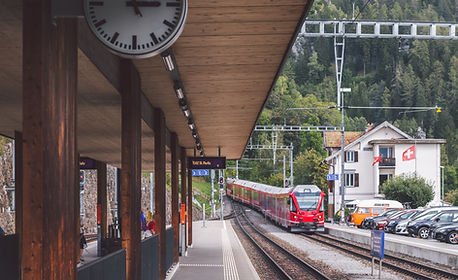
Train is probably the best way to move in Europe if you need to go from one city to another (it can be a little bit harder in the countryside). We have high speed trains that go faster than 300 km/h (200 mi/h).
Of course, we have a lot of planes above our heads. Europe is famous for its low cost flights between its cities, even if after the Pandemic they're much less convenient than before.
Taxi and cabs are very much used in big cities, but they're generally quite expensive.
Bycicles are very diffused in the North (especially in the Netherlands), while in the South there are less bike lanes.
Europe is also full of trails for pedestrians: trekking routes, country roads, panoramic roads. Remember that pedestrians are kings in Northern Europe, and the lowest step of the stairs in Italy. Watch out!

URBAN WILDLIFE
European cities are full of animals. Not only dogs and cats, of course, but wild animals.
Once again, it depends very much on the country you're in. Norway's wildlife is immensely different than Portugal's or Greek's wildlife.
I think the only common beast through all European cities is pidgeon: this grey small bird with the green and purple neck was breeded for centuries by humans that used them for messages (like airmail before planes). Now they're everywhere in Europe, but remember: even if they come near you when you give 'em food, they're wildlife, not pets, and they can be dangerous.
Rats are also very much diffused: they live in the sewers, but it's not rare to see them coming out looking for food. Avoid them at all costs.
In European cities we also have squirrels, foxes, wild boars (even in Rome, Italy!), hedgehogs and peregrin falcons on the top of skyscrapers.
You may encounter lizards, parrots, bugs, mosquitos, geckos, frogs, hornets, crows, bats, and the list goes on and on.
Be aware that most of these animals are protected species or potentially dangerous (they diffuse diseases or can bite/attack), so if you see them, my suggestion is you can try to take a picture, and then leave 'em alone. Respect nature even if you're Downtown.